Home / Blog / Buying used home appliances in Japan: what to check before paying
used home appliancesrefrigeratorwashing machinemoving into a new home
Buying used home appliances in Japan: what to check before paying
▣
Buying used home appliances in Japan can save a lot, provided you measure the space and know how to check refrigerator seals and washing-machine drums before deciding.
Used appliances cost much less than new ones in Japan, but a poor fit or failing unit wastes money and transport effort. This guide is for Vietnamese residents moving into homes around Funabashi, Chiba and Tokyo.
Measure the space before choosing an appliance
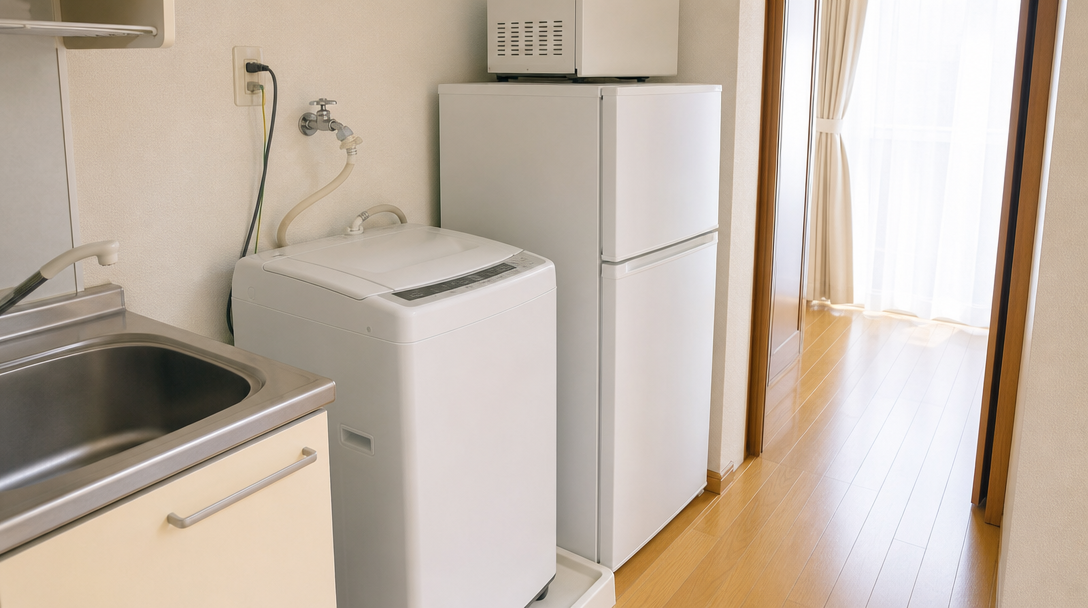
Measure the width, depth and height of the installation space before shopping. Japanese homes often leave very tight clearances.
Refrigerators need clearance behind and on both sides for ventilation; do not place them against a wall. A cramped placement makes the appliance run more and use more electricity.
Washing machines need a drain and water inlet nearby. Also check whether the nearby power outlet can be reached.
What to check in a used refrigerator
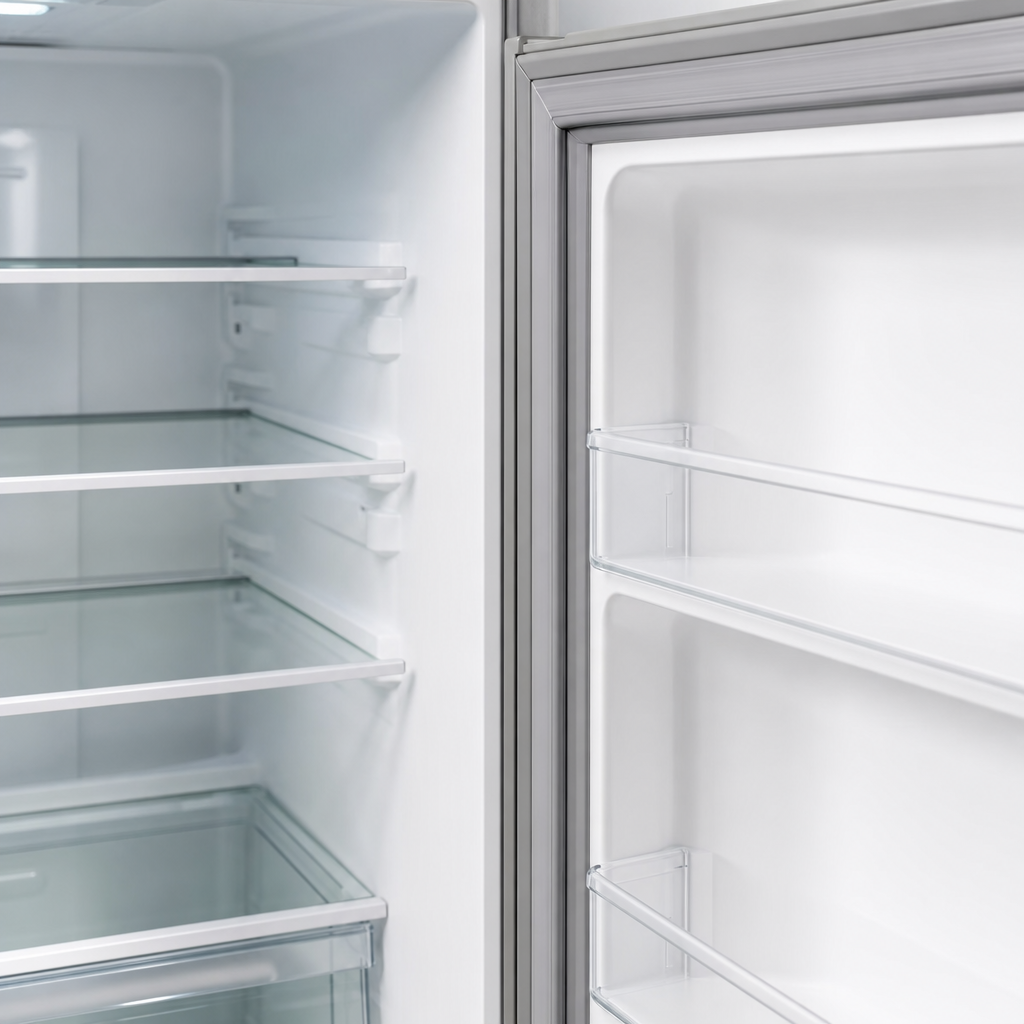
Check that the door seal is tight. A loose seal leaks cold air, makes the compressor run continuously and causes freezer frost.
Listen to the appliance while it runs and smell inside the cabinet. These reveal more about its condition than appearance alone.
Ask about the appliance condition before deciding; do not rely on photos alone.
What to check in a used washing machine
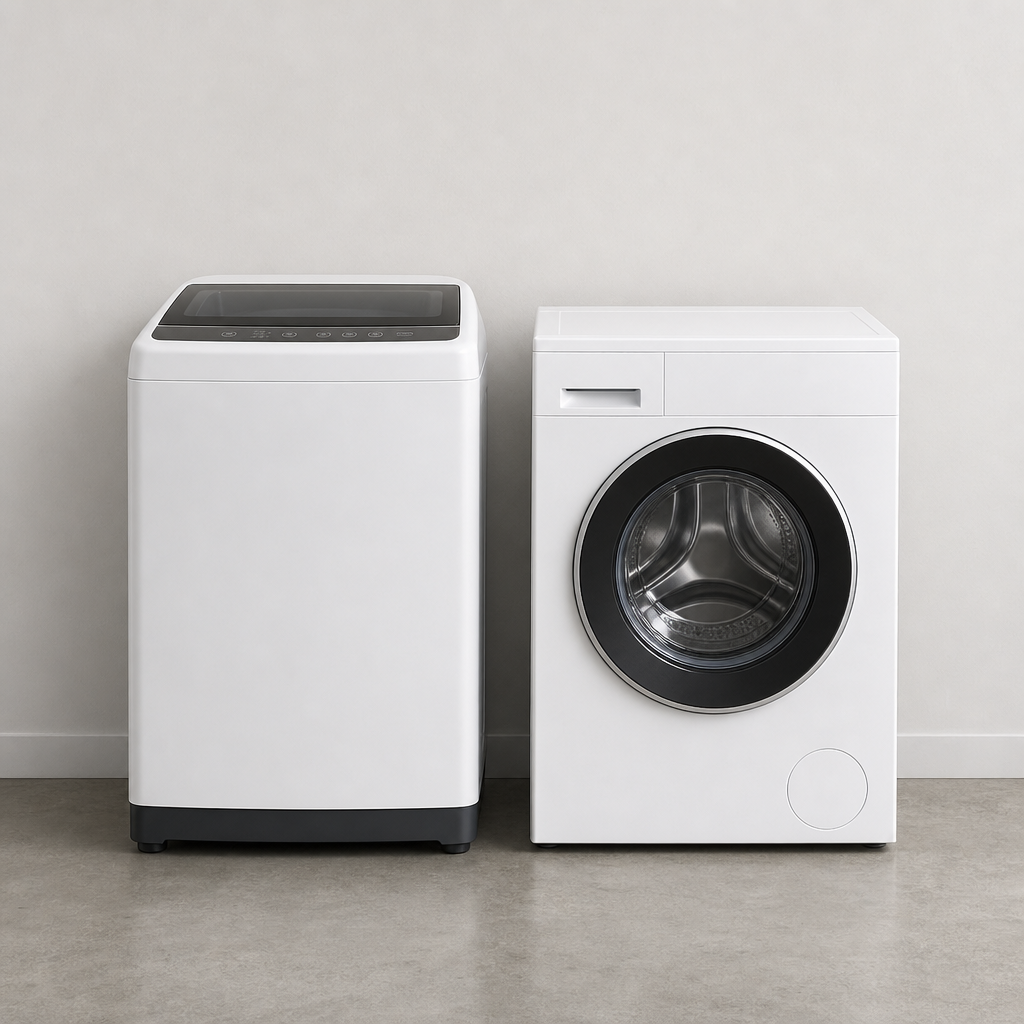
Top-load washers are light and easy to place. Front-load models take more space, but some wash and dry in one cycle, which is useful in rainy seasons or rooms without drying space.
Check whether the washing-machine drum shakes strongly or makes loud noises during spin.
Check that the drain and inlet hoses are long enough and still flexible, as hardened hoses can crack and leak.
Buying used appliances in Japan: individual items or a move-in bundle
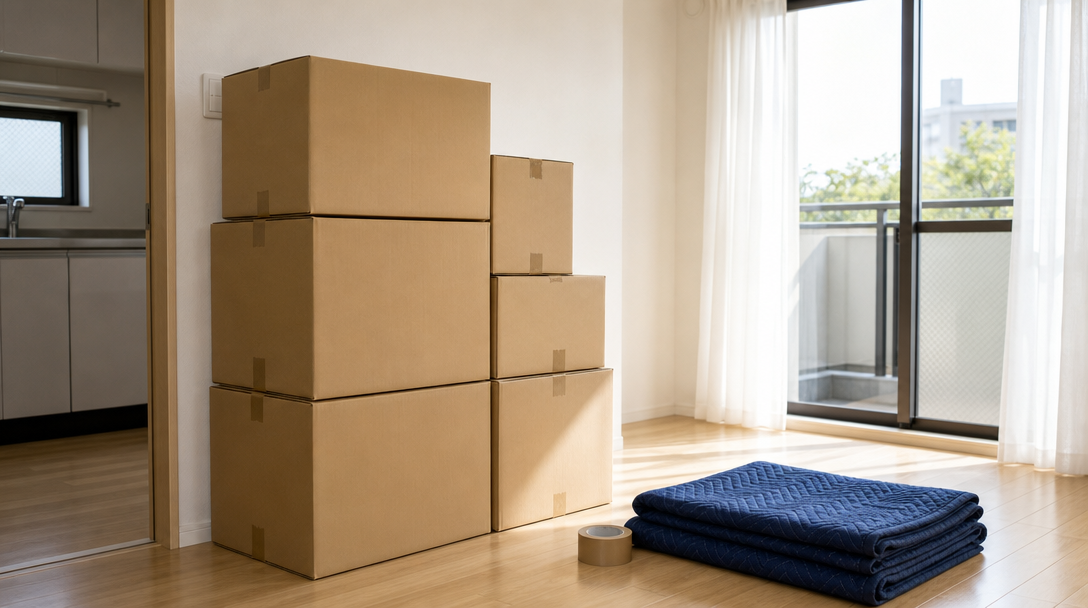
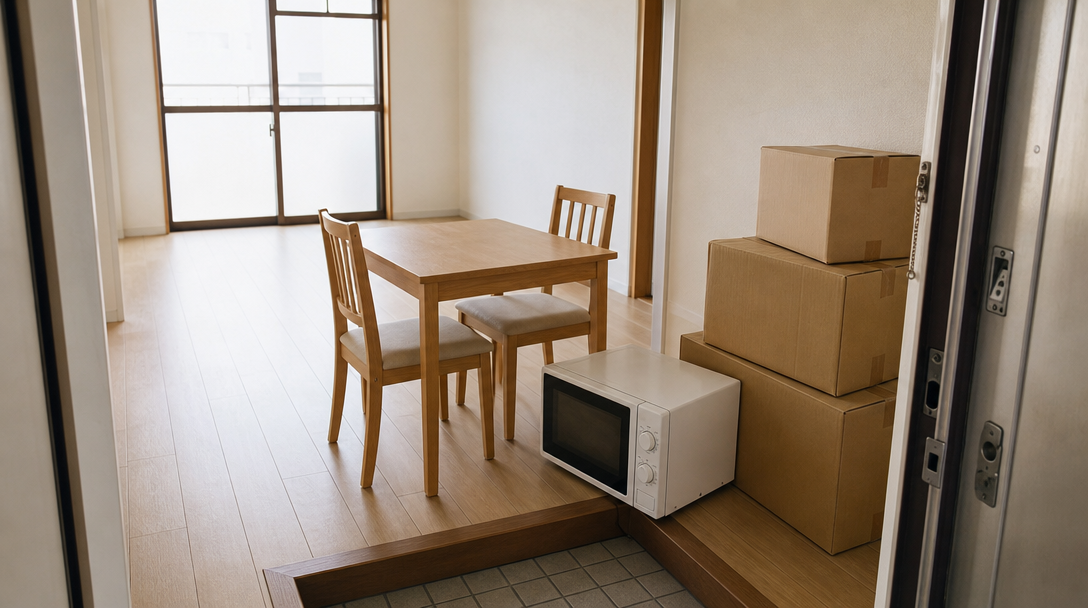
Kanto sells used refrigerators, washing machines and microwaves, plus move-in bundles delivered to your room with installation support.
Combining everything means booking the elevator and receiving items once instead of scheduling a separate session for each item.
If the room still needs tables, chairs or cabinets, ask in the same message.
How to ask and decide quickly
Message Kanto on Facebook or call the hotline with the address, floor and elevator details.
Kanto serves Funabashi, Chiba and the surrounding Tokyo area.
Tell us your preferred delivery date so it can be scheduled with your move when possible.
Moving in Japan is most difficult because of bulky items and building procedures. The order is: measure access routes, sort belongings, pack by room, then install the air conditioner at the new home.
Selling used items in Japan is faster than waiting for bulky-waste collection. Learn what can be resold, how to prepare it and how to combine it with your move.
 Fast delivery across Kanto
 Vietnamese & Japanese support
 Quality-checked products
 Free consultation & quotes